

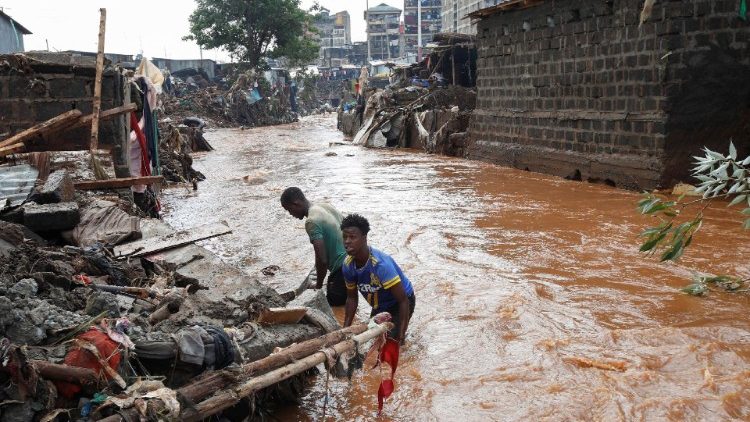
Heavy rains forecast from April 7 to 13 raise alarm over flooding, mosquito-borne illnesses, and cold-weather health risks across the country
The Kenya Meteorological Department has issued a public health and safety warning covering much of the country, cautioning residents in several counties to prepare for heavy rainfall, flooding, and associated disease outbreaks during the week of April 7 to 13, 2026.
ALSO READ: IEBC Advises Voters with Online Verification Issues to Visit Constituency Offices
The advisory, contained in the department’s Biometeorological Weekly Bulletin, identifies specific counties at elevated risk and outlines the health consequences that historically follow prolonged downpours and standing floodwater.
Counties in the Flood Risk Zone
Kenya Met has flagged two broad clusters of counties where cumulative rainfall is expected to exceed 50 millimetres over the course of the week — a threshold that significantly raises the likelihood of localised flooding, particularly in low-lying and drainage-constrained areas.
In the Highlands East of the Rift Valley, the counties of Nairobi, Murang’a, Nyeri, Embu, Kirinyaga, Meru, and Tharaka Nithi are expected to receive the heaviest rainfall. “Few places in counties such as Nairobi, Murang’a, Nyeri, Embu, Kirinyaga, Meru and Tharaka Nithi in the Highlands East of Rift Valley are expected to receive cumulative rainfall exceeding 50mm during the forecast period,” the bulletin noted.
In the western parts of the country, the counties of Kisii, Bomet, Migori, Homa Bay, Kericho, Narok, Vihiga, Busia, and Kakamega face similar conditions, with flooding a real possibility in areas historically prone to inundation.
Further north, Moyale in Marsabit County has been singled out as a particular area of concern, with forecast rainfall also projected above 50 millimetres and a moderate flood risk identified through April 13. Notably, both the Moyale area and parts of the highlands had endured extended dry spells for much of late 2025 and into 2026, meaning the ground may struggle to absorb sudden heavy rainfall — increasing surface runoff and flood risk.
Kitui and Taita Taveta counties are also expected to record above-normal rainfall during the same period, with isolated locations likely to see especially heavy downpours.
Disease Outbreak Risks Heightened
Beyond the immediate physical dangers of flooding, Kenya Met is raising the alarm over the public health consequences that typically follow in its wake.
Stagnant floodwater creates ideal breeding conditions for mosquitoes, and the bulletin identifies an elevated risk of malaria, dengue fever, Rift Valley Fever, and chikungunya across all affected counties this week.
Waterborne diseases present an equally serious concern. Where floodwaters contaminate wells, boreholes, and surface water sources, the risk of cholera, diarrhoea, and typhoid rises sharply. The department is urging communities to prioritise access to clean drinking water as a matter of urgency.
“There is an increased risk of mosquito-borne diseases — malaria, dengue, Rift Valley Fever, chikungunya — and waterborne diseases including cholera, diarrhoea, and typhoid, due to rainfall and stagnant waters,” the bulletin stated.
Cold Snap Adds a Third Health Threat
Compounding the situation, several highland counties are forecast to experience unusually low temperatures this week, adding cold-weather health risks to an already demanding outlook.
Minimum temperatures of 10 degrees Celsius or below are expected in parts of Nyandarua, Nyeri, and Meru counties — well outside the normal range for this time of year. Nyahururu in Nyandarua County faces the sharpest exposure, with the bulletin citing moderate risks of pneumonia, bronchitis, influenza, and asthma for local residents.
Kenya Met has specifically called for precautionary measures in households with children, the elderly, and individuals living with chronic or cardiovascular conditions, who are most vulnerable to cold-induced health complications.
What Kenyans Are Being Advised to Do
The Kenya Meteorological Department has issued a set of practical guidelines for residents across the affected regions as the high-risk weather week unfolds:
- Drain stagnant water around homes and compounds to reduce mosquito breeding sites
- Sleep under treated mosquito nets throughout the forecast period
- Avoid flooded areas and landslide-prone zones, particularly after sustained or heavy downpours
- Dress in warm layers in highland areas where cold temperatures are expected
- Follow daily weather updates from Kenya Met as conditions may evolve through the week
Residents are urged to treat the advisory seriously and take precautionary steps without waiting for conditions to deteriorate. Kenya Met indicated that dangerous weather conditions are expected to persist across the affected counties for the duration of the forecast period.